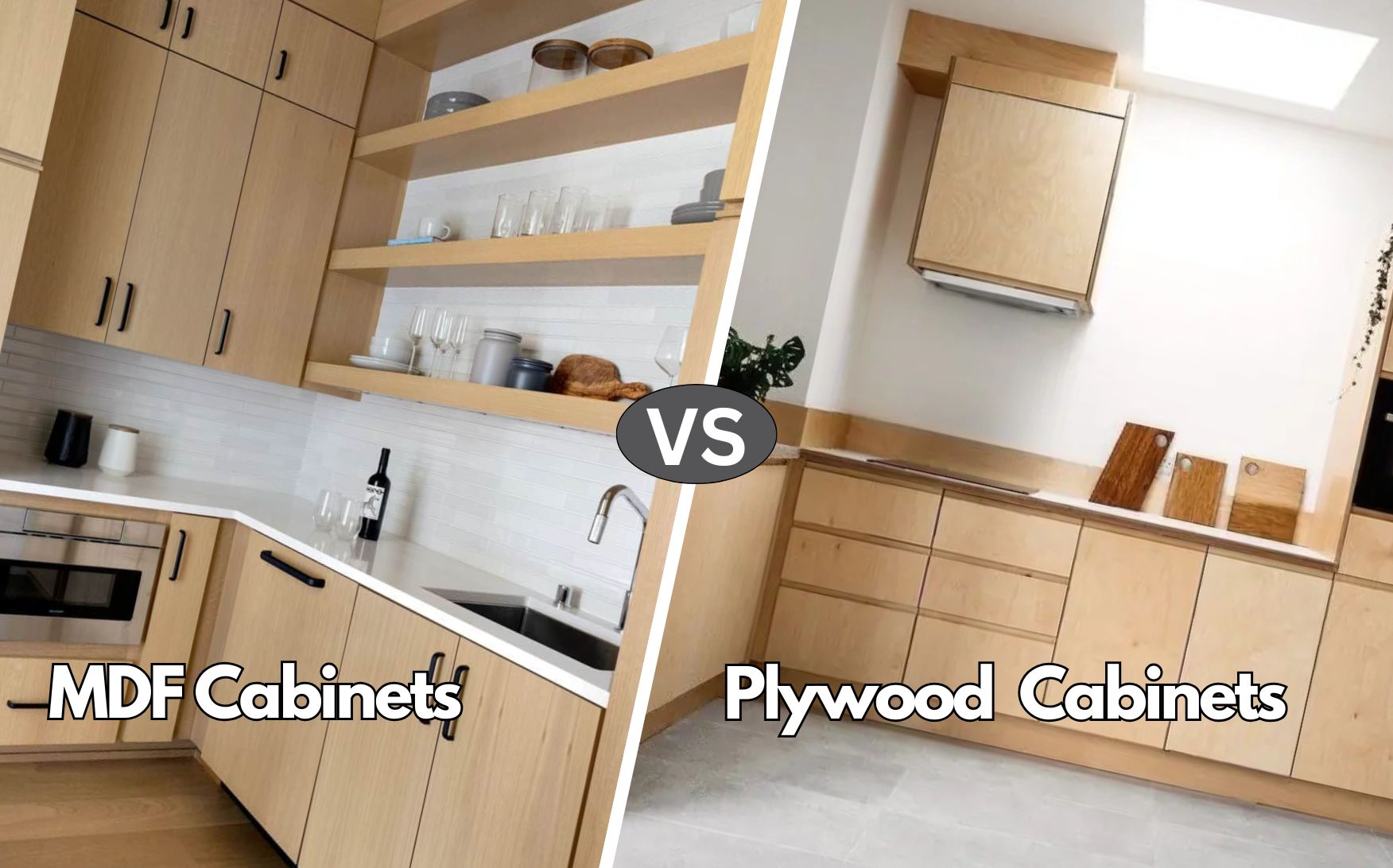
Cabinetry is considered one of the components that can take up a significant amount of the overall budget. People looking for affordable cabinets often choose MDF, while Plywood is picked for better practicality. This means both are different in durability, moisture resistance, appearance, lifespan, and cost.
This guide to MDF vs Plywood Cabinets is crafted to help you determine which choice is right for your needs. It mostly depends on your budget, the area where the cabinets are installed, and the daily wear they will experience. Then see which one is good for your preferences. So, let’s start today’s comparison.
Quick Comparison Table: MDF cabinets vs Plywood
Before learning the detailed differences between these two types of kitchen cabinetry, let’s look at a quick comparison table first:
| Feature | MDF Cabinets | Plywood Cabinets |
| Material Composition | Made from hardwood, softwood fibres, wax, and resin that are compressed in extreme heat and pressure. | Various thin layers (plies) of natural wood veneer glued together in different directions to make the panel stronger. |
| Average Cost by 2026 | Lower initial cost, making it a budget-friendly option for many homeowners. | Typically costs 20% to 50% more than MDF, depending on wood species and plywood grade. |
| Strength | Strong enough for everyday cabinet doors and shelves, but less rigid for handling heavy loads. | Significantly stronger and more structurally stable, making it ideal for heavy storage use. |
| Durability | Performs well in dry indoor spaces | Can be used long-term and last for decades when properly maintained. |
| Moisture Resistance | Standard MDF absorbs water quickly if exposed. Moisture-resistant MDF offers better protection than standard MDF. | Better resistance to humidity and occasional moisture. |
| Resistance to Warping | Does not warp easily because it has no natural wood grain. | Highly resistant to warping, but poor-quality plywood can still deform over time. |
| Surface Finish | Smooth surface that’s perfect for painted cabinets with a flawless finish. | Natural wood grain may require additional preparation before painting but looks beautiful with stain or clear finishes. |
| Appearance | Uniform surface with no visible grain or knots. | Showcase authentic wood grain, giving cabinets a more natural and premium appearance. |
| Paintability | Excellent. Paint adheres evenly without showing grain. | Good, but wood grain may remain slightly visible. |
| Weight | Generally heavier than plywood of the same thickness. | Lighter, making installation and transportation easier. |
| Repairability | Chips and swollen areas are difficult to repair permanently. | Minor dents, scratches, and damaged sections are generally easier to repair or refinish. |
| Expected Lifespan | Around 10 to 20 years with proper care in dry areas. | Stays for 20 to 40+ years, depending on quality and maintenance. |
| Best For | Painted kitchen cabinets, bathroom vanities in low-moisture areas, laundry rooms, rental properties, and budget-friendly models. | Premium kitchens, custom cabinetry, humid environments, large cabinets, and long-term preferences. |
| Overall Value | Offers excellent value when affordability and a smooth painted finish are the main priorities. | Delivers better long-term value due to better strength, durability, and repairability. |
What Is MDF?
MDF stands for medium-density fiberboard. It is a man-made wood that is manufactured by breaking down hardwood and softwood. They are combined with resin and wax. Afterwards, they are compressed by extensive heat and pressure to form dense, uniform panels.
Due to its MDF composition, it gets a smooth surface that is free from visual grain, knots, or voids. This is why it can be cut, shaped, and finished, making the painting process super easy.
MDF is widely used for cabinet doors, drawer fronts, cabinet panels, shelving, and decorative trim in kitchens, bathrooms, and other indoor spaces. It is available in different grades, including standard MDF for general interior use and moisture-resistant (MR) MDF for areas that experience occasional humidity.
MDF use cases are not limited just to cabinet panels. It is also used for cabinet doors, drawer fronts, shelving, and decorative trim in kitchens, bathrooms, and other interior areas.
What Is Plywood?
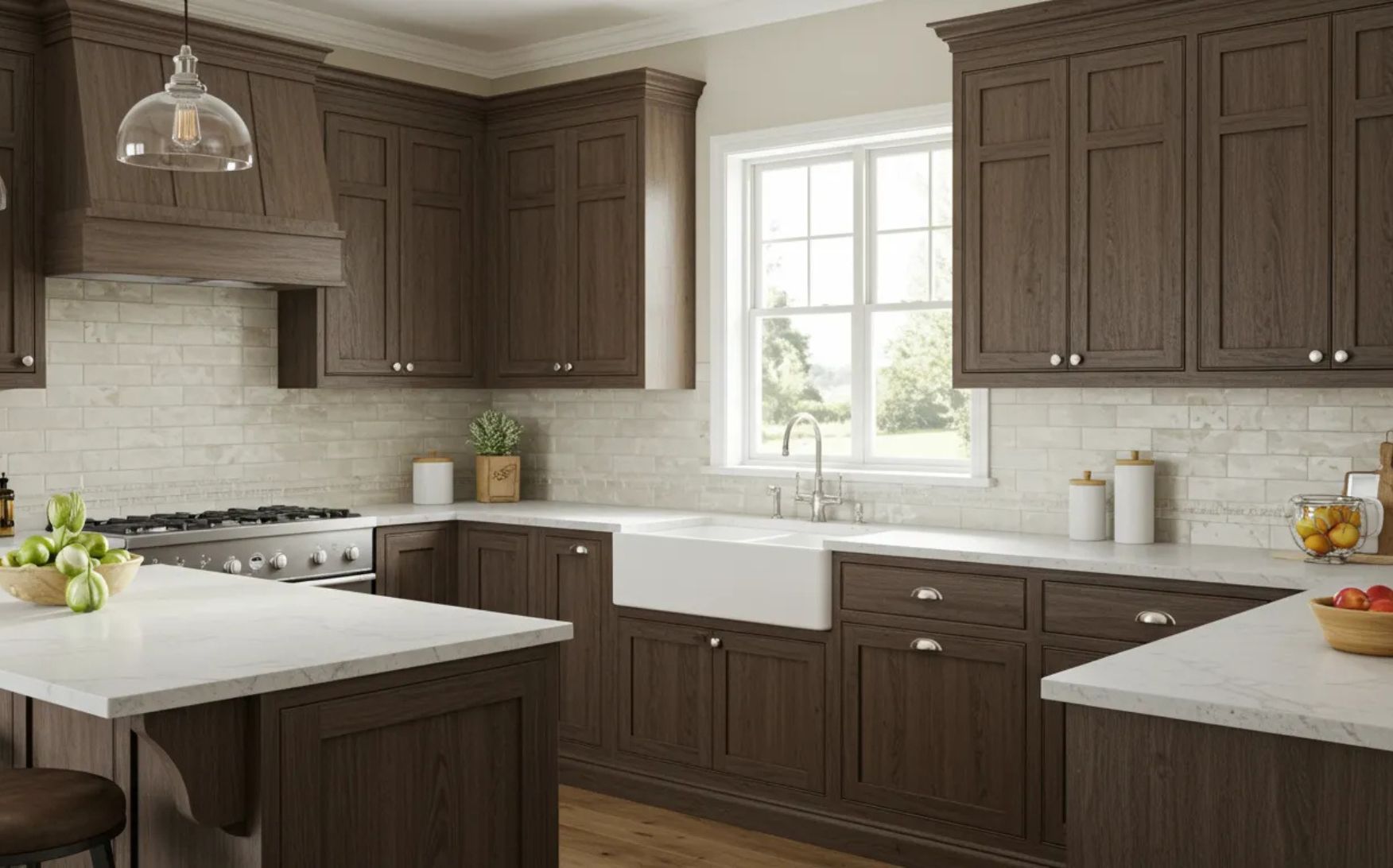
Plywood is also an engineered wood, but its manufacturing process is different. It is made by sticking multiple thin layers (plies) of natural wood veneer together with strong adhesives. They are then passed under high heat and pressure. When each layer is placed, its grain runs in the opposite direction of the adjacent layer. This is why they create a stable texture and a durable panel.
The formation of plywood in this way gives it a more natural wood appearance. You can choose Plywood cabinets in different wood species, grades, and thicknesses. Its material is mostly used for cabinet boxes, shelves, drawer boxes, and other structural areas of kitchen and bathroom cabinets. There is an interesting fact for you. Plywood is manufactured in different types, including interior, exterior, and marine-grade plywood. So, you can use it in a variety of indoor and moisture applications.
Understanding Key Differences: MDF vs Plywood kitchen cabinets
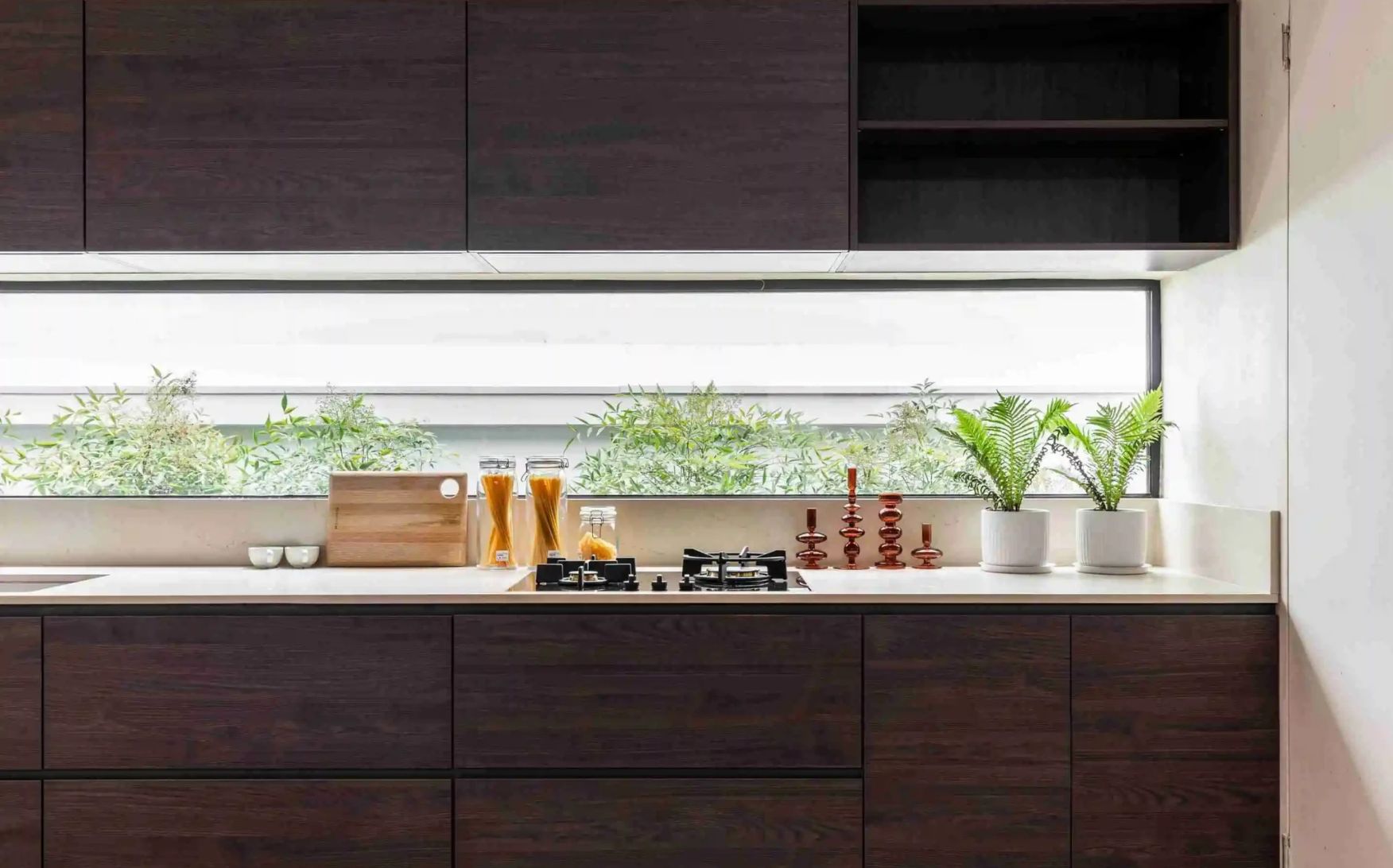
You may now understand both materials. This helps evaluate their differences clearly. The following factors highlight what makes them differ from each other:
Strength and Durability
The most prominent difference we see in plywood and MDF is in strength and durability. Plywood generally has the advantage of durability and denser surfaces over MDF. Its construction gives it a layered structure that makes a harder, stronger surface, allowing it to handle heavy loads. They perform well daily and has less risk of bending or cracking. They have a strong grip on screws and fasteners, which is important for attaching boxes and hinges in their place. They open and close often, so usage is also a vital factor to consider.
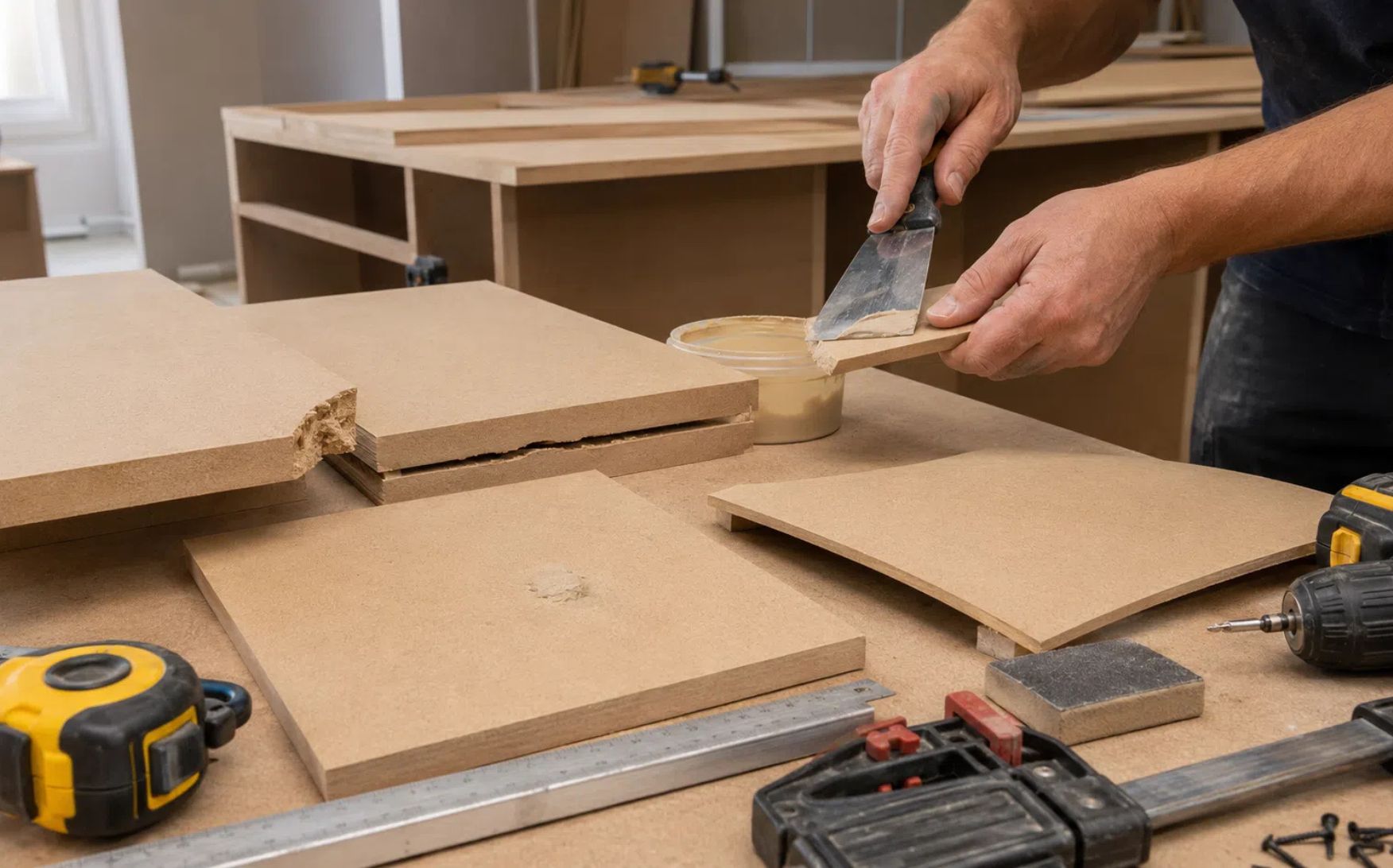
Now, if we talk about MDF strength, it is stronger for many cabinet applications like cabinet doors and decorative panels. But not enough to compete with plywood. That’s because its surfaces can show chips, cracks, or dents over time under extensive weight. Plus, if hardware is removed and reinstalled multiple times, it may not hold screws effectively. This happens because fibres around the screw holes start to wear away.
Appearance
Since both are wood materials, they have varied appearances. We learned in the introduction that MDF offers a uniform, non-grainy surface, but plywood has grain patterns of natural wood. Here is why:
MDF has a smooth surface because it is made of wood fibres instead of a wood layer. It does not have any grain, knots, or other natural variations that show externally. This allows for a clean and even finish on painted cabinets. We can say this is the reason why MDF is mostly chosen for cabinet doors. The demand increases with detailed profiles or decorative edges.
Plywood portrays a real wood, particular look because of the wood veneer. So, the patterns, texture, and colour vary by the wood species and grade. Using different types of veneer means giving plywood a unique appearance. Although its surfaces can be painted, homeowners mostly make the organic look prominent with stain or transparent finishing.
Moisture Resistance
In kitchens, steam, spills, and humidity are common. Therefore, many homeowners look for cupboards that can withstand that.
Standard MDF can be gradually damaged by moisture. The material swells when fibres absorb water, and it goes to unsealed edges, joints, or damaged areas. Over time, it results in significant harm. You can hardly see the original shape and appearance. The solution is to use moisture-resistant MDF that performs well in humid indoor conditions. This gives you the opportunity to use MDF cabinets even for areas that are often exposed to moisture.
Turning to plywood means you don’t have to search for its humidity-resistant variant. Standard plywood offers better protection against moisture. Now, you might be thinking why plywood does not get affected by moisture. The layers of wood are arranged in alternative directions when it is constructed. This reduces the movement caused by changes in humidity. If you are looking for a fully carefree option, use exterior-grade or marine plywood. You can use them in spaces with higher moisture without worry.
Maintenance and Lifespan
Maintenance means care and upkeep you have to give them to enjoy them for longer.
You may have to focus more on MDF maintenance because it can have chips and scratches. Be careful about how you are using it. The big concern is that if the damage starts, the repair needs to be done quickly. This is to avoid moisture seeping into the core of MDF. If you keep it away from moisture, it can last 10 to 20 years. You have to give your best to provide proper care and maintain the finish.
On the other hand, Plywood is not much harder to maintain. Its structure makes it more resistant to everyday wear, and it is not affected by small exposure to moisture. It can tolerate occasional humidity impressively. Its strength and less maintenance increase its lifespan. You can expect its best appearance and functionality for 15 to 25 years.
Best Use Cases of MDF vs Plywood Kitchen Cabinets
The difference in durability, composition, and functionality makes them ideal for different applications.
MDF
MDF is widely used for painted cabinet doors, drawer fronts, and decorative panels. Mostly for visible cabinet components, right? Because it offers a flat, clean, and simple appearance. We can also see them used for cabinets with routed profiles and intricate designs. Designers also use them for finishes where a flawless painted appearance is important. It can work effectively in almost all indoor kitchens with controlled humidity.
Plywood
Plywood has excellent structural strength and moisture resistance. This is the reason it is commonly used for cabinet boxes, shelves, and drawer boxes. Homeowners who can’t protect cabinets from humidity mostly use plywood. It works best in kitchens that experience frequent use or higher humidity.
Cost Comparison
MDF have been chosen for its budget-friendly prices. Plywood is more expensive than MDF because they are made from multiple layers of natural wood veneer. The final price of the project depends on the area, product quality, and labour fees. The table below shows the price range of common MDF and plywood sheets used for cabinet construction:
| Material | Thickness | Price Per Sheet (USD) |
| Standard MDF | 1/4″ to 1/2″ | $10 to $25 |
| Standard MDF | 3/4″ | $35 to $55 |
| B/C Softwood Plywood | 1/2″ | $25 to $60 |
| B/C Softwood Plywood | 3/4″ | $50 to $70 |
| Oak Faced Hardwood Plywood | 3/4″ | $75 to $130 |
| Marine Grade Plywood | 3/4″ | $140 to $180 |
MDF Cabinets vs Plywood FAQs
Here are the answers to some common questions, so you don’t leave with doubts:
Do MDF cabinets increase a home’s resale value?
Yes, high-quality MDF cabinets can indirectly increase home value. Meaning, if buyers find them visually appealing, they contribute to resale value. So, it is correct to say that it may not directly determine the home’s resale value. But adds slightly.
Can MDF and plywood be used together in the same kitchen cabinets?
Yes, you can use MDF and plywood in the same kitchen. The plywood can be used for cabinet boxes, the storage area. MDF can provide beautiful painted doors and drawer fronts due to its plain, modern surface.
Which material is quieter when opening and closing cabinet doors?
MDF is considered quieter when opening and closing cabinet doors. However, the cabinet hardware has a greater impact on noise than the cabinet material itself.
Do MDF or plywood cabinets attract termites?
Yes, MDF and plywood attract termites. As both are wood-based materials, neither is resistant to them. Their presence depends on the environment, moisture levels, and whether the cabinets have been properly maintained.
Can damaged MDF or plywood cabinets be repaired?
Yes, both materials are repairable with different processes. Small scratches, dents, and chips on MDF can be addressed with wood fillers; repainting may be needed afterwards. If the swelling is happening with moisture, the damaged panel needs to be replaced. For plywood, you can use wood filler or veneer repair products.
Final Verdict: MDF vs Plywood for Kitchen Cabinets
Reading the major differences shows that no one is universally best. If standard MDF can’t resist moisture, plywood is expensive. If you feel that MDF aligns with your preferences but humidity is a concern, use MR MDF. But if you choose plywood, it is worth investing. MDF remains famous for its smooth, clear, and flat surfaces. Plywood gives a natural grained appearance and is more durable than MDF. So, first think deeply by considering all factors, then make a decision. A direct decision is not recommended. You can talk to a friend who already has experience with the material you pick. They will give a genuine review.
Moreover, if you’re still unsure which cabinet material best suits your kitchen, consult professionals like Tivoli Design Group for expert guidance. Visiting a showroom, comparing material samples, and discussing your project with experienced designers can help you make a confident decision before placing your order.