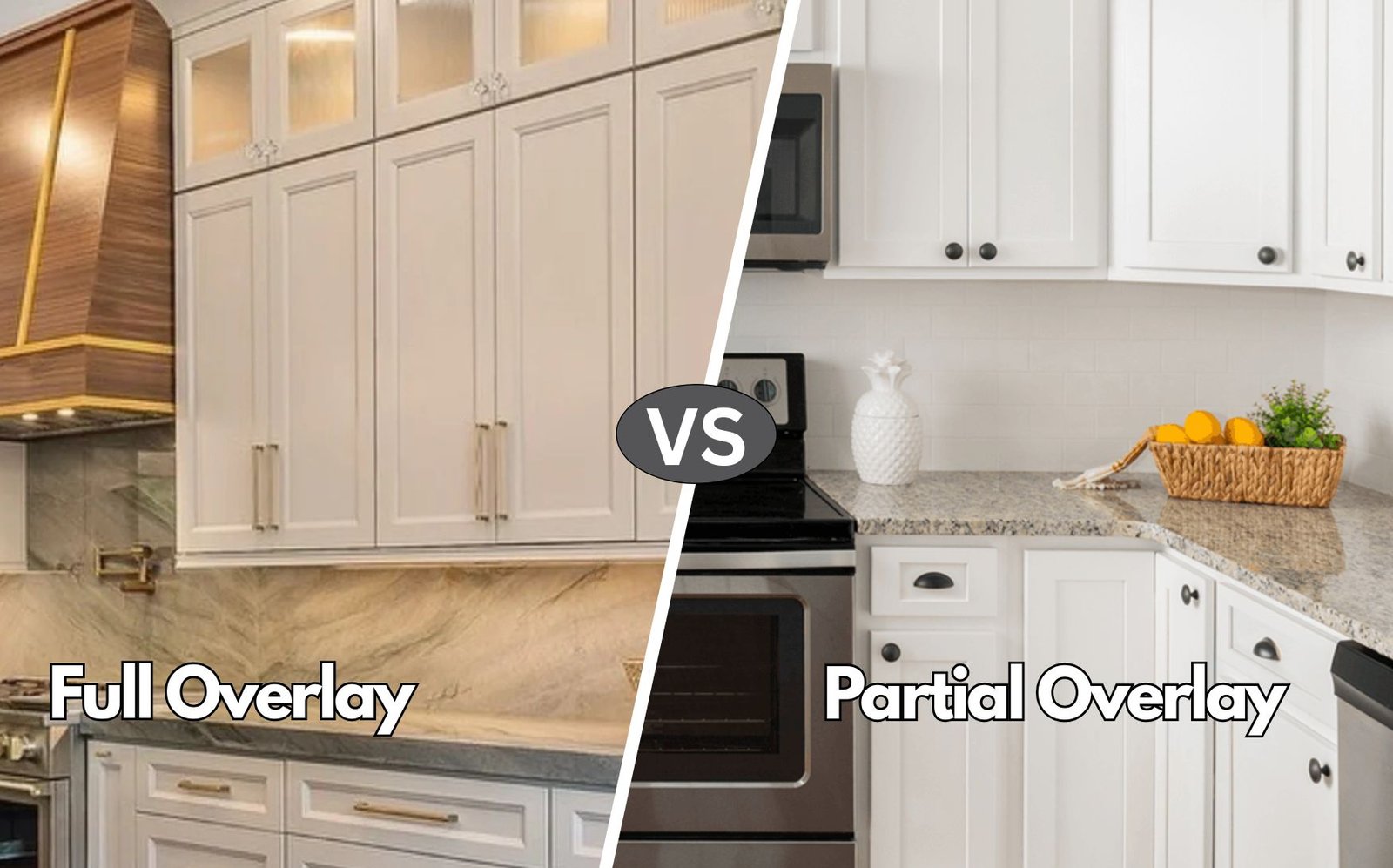
Cabinet doors may seem a small design detail. But it affects how your kitchen looks, functions, and even the total cost of the remodel. The most popular styles are full overlay and partial overlay. They may look similar, but they are not. Their door coverage, overall appearance, hardware, and price are different.
Understanding such small differences is important, especially when you are planning a new kitchen or replacing existing cabinetry. One offers a more classic look at a budget-friendly price. The other features a modern design but costs slightly more.
You can determine which one suits your taste by reading today’s guide. We will comprehensively discuss the differences between full overlay and partial overlay cabinets.
Partial Overlay vs Full Overlay Cabinets: Quick Comparison
First, let’s take a quick overview of the main differences between partial overlay and full overlay cabinets.
| Feature | Partial Overlay Cabinets | Full Overlay Cabinets |
| Door Coverage | Cabinet doors cover only part of the face frame and leave visible gaps between doors and drawers. | Cabinet doors cover almost the entire face frame, which gives cabinets a seamless appearance. |
| Overall Look | More traditional and detailed, with the cabinet frame becoming part of the design. | Sleek, clean, and modern with a furniture-like finish. |
| Visible Cabinet Frame | A significant portion of the face frame remains visible. | Very little of the face frame is visible from the front. |
| Storage Accessibility | Slightly smaller door openings because more of the face frame remains exposed. Interior cabinet volume stays nearly the same. | Wider door openings make it easier to access shelves, cookware, and larger kitchen items. |
| Cost | More budget-friendly option due to simpler door sizing and hardware requirements. | Costs more because it requires larger doors, more precise manufacturing, and careful installation. |
| Hardware | Works well with both exposed decorative hinges and concealed European hinges. | Primarily uses concealed European hinges for proper alignment and adjustability. |
| Installation Precision | More forgiving during installation since larger gaps between doors help hide minor alignment differences. | Requires precise installation and hinge adjustments to maintain consistent, narrow reveals between doors. |
| Style Compatibility | Work best in traditional, farmhouse, cottage, colonial, and transitional kitchens. | Ideal for modern, contemporary, Scandinavian, and minimalist kitchen designs. |
| Best For | Homeowners who prefer a classic appearance and budget-friendly cabinets. | Homeowners looking for a premium, plain design with a premium custom look. |
What Are Full Overlay Cabinets?
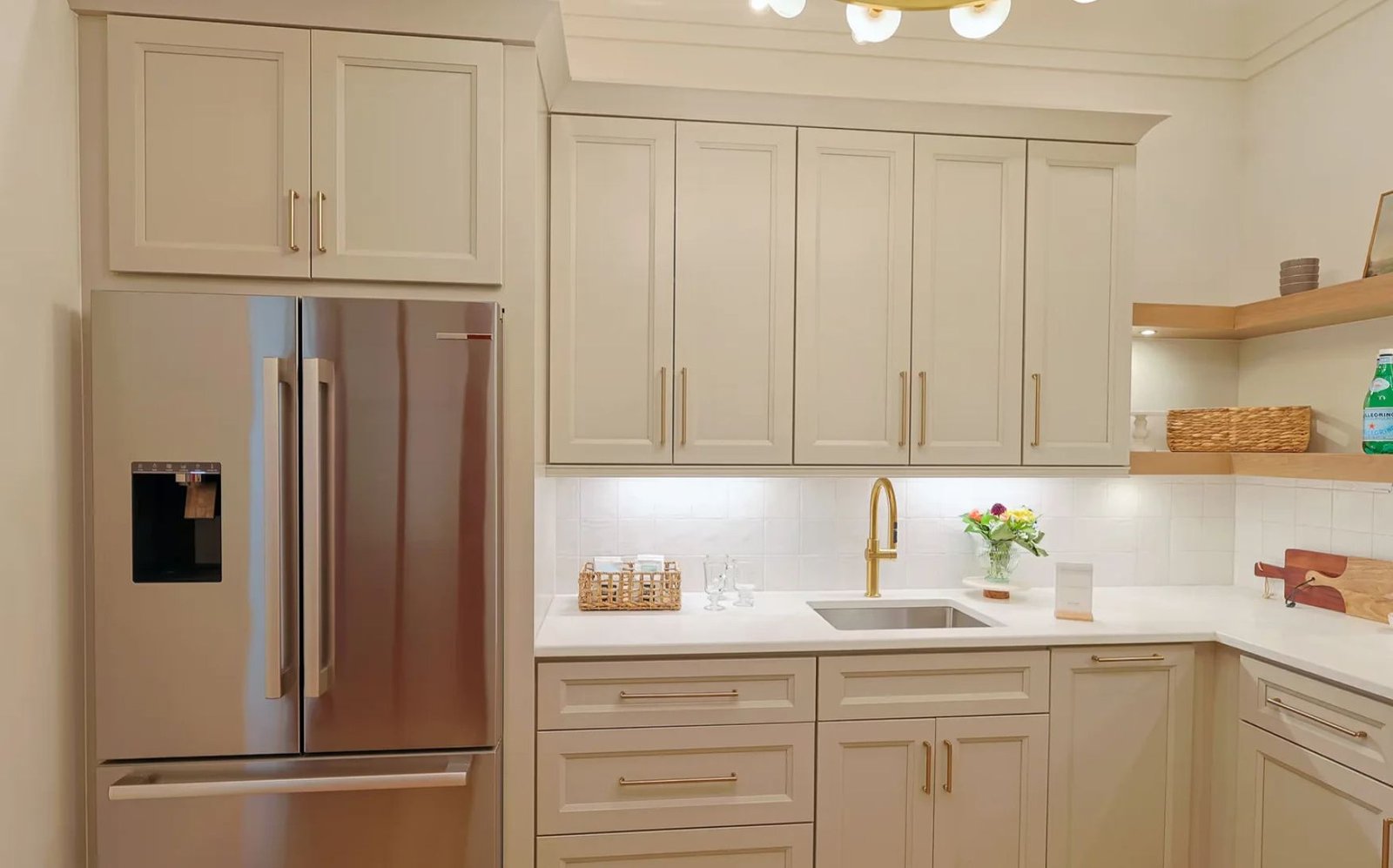
Today, full-overlay cabinets are common in many modern kitchens. These overlay doors are big enough to cover almost the entire cabinet frame. The gap between doors and drawers is small, about 1/8 inch. The wooden frame feels as if it hides behind the doors when we look straight at full-overlay cabinets. The clean lines of this design create a smooth, uninterrupted look often seen in contemporary kitchens. Everything flows together without visual breaks. It’s clean. It’s streamlined. And honestly, it looks expensive.
This way, these cabinets give a smooth, plain look that prioritizes in contemporary, minimal kitchens. To describe the appearance of these surfaces, we can say they flow without any break, creating a clean, simple, expensive feel. Full overlay has been one of the top choices since the 1990s. Today, it is also in trend for new construction and high-end remodels.
What Are Partial Overlay Cabinets?
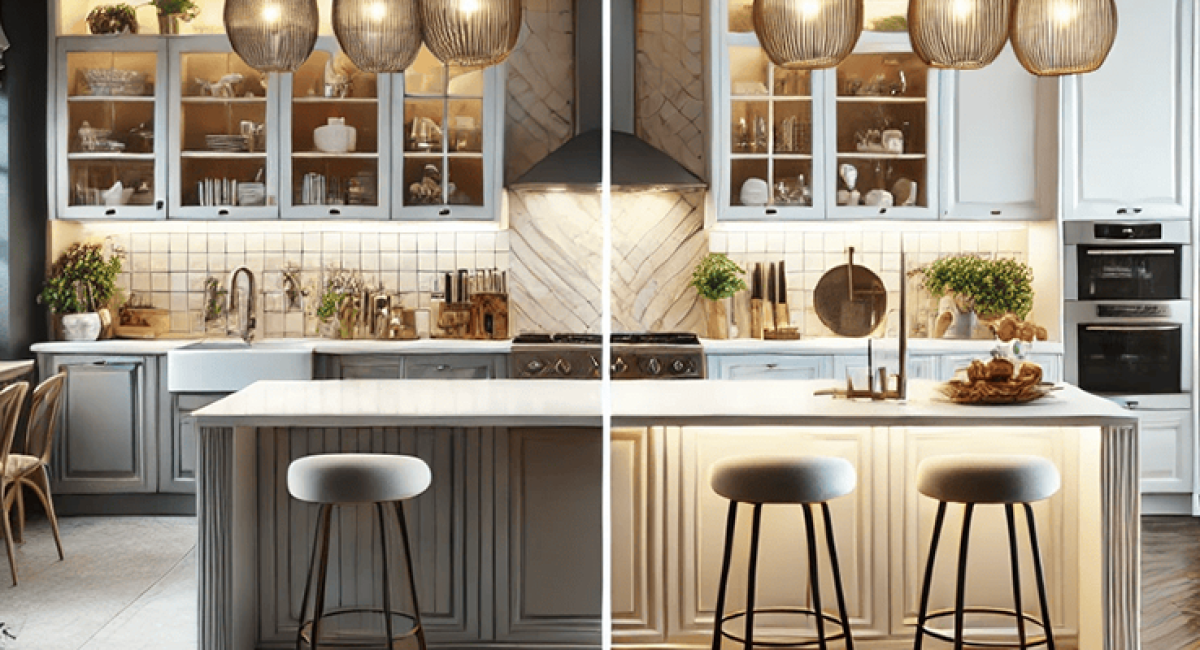
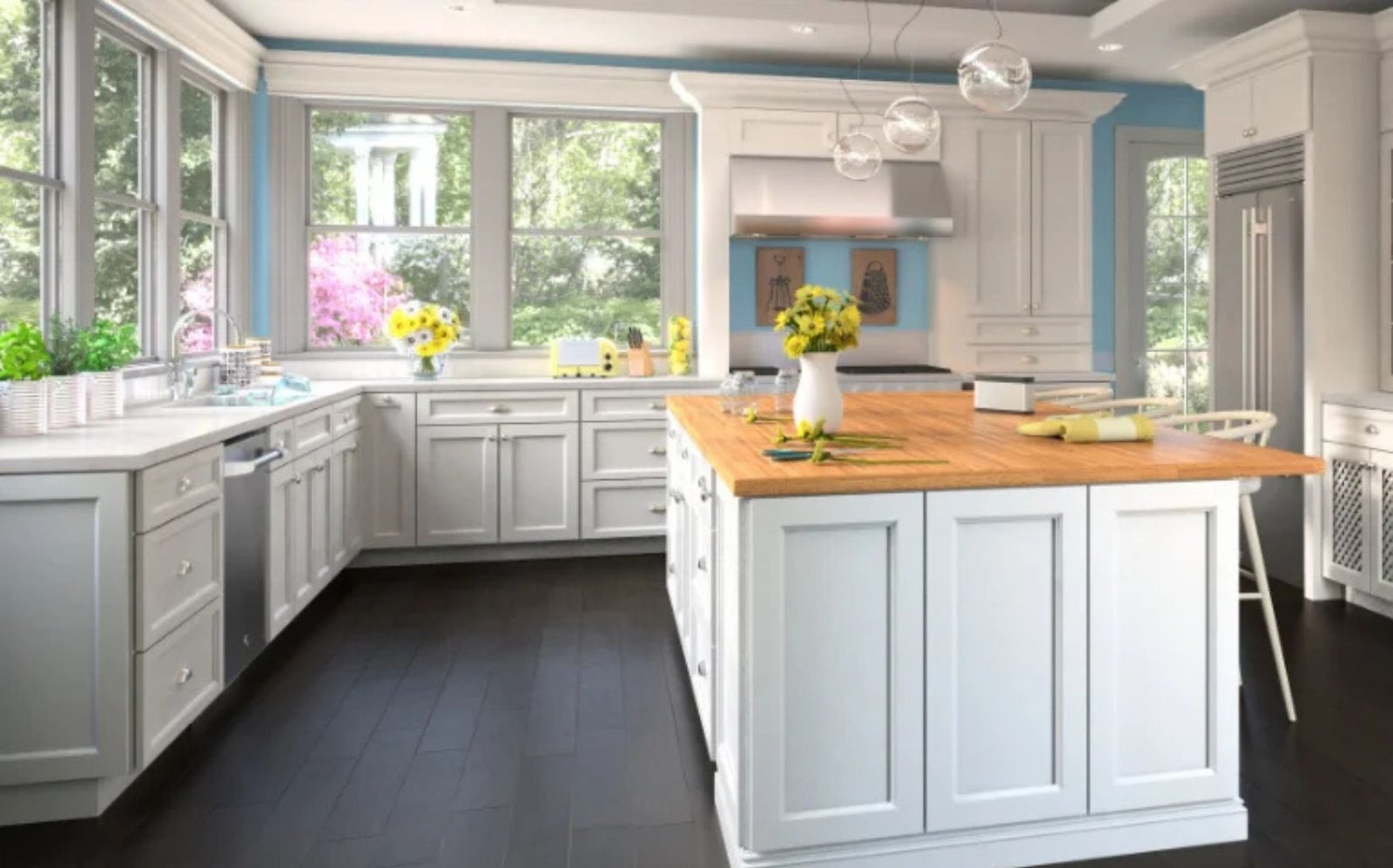
Their doors do not completely cover the face of the cabinet’s frame. So, the gap between the door and drawer is more visible than full overlay cabinets. The gap is typically about 1 to 2 inches in width. This means the fronts of these cabinets have a more defined, detailed appearance. Instead of a continuous, plain look, the frame adopts a structural look by more prominently separating the doors and drawers. Although partial overlay cabinets have been used for decades, they are still not outdated. They are likely to remain a popular choice for traditional, farmhouse, cottage, and transitional kitchens.
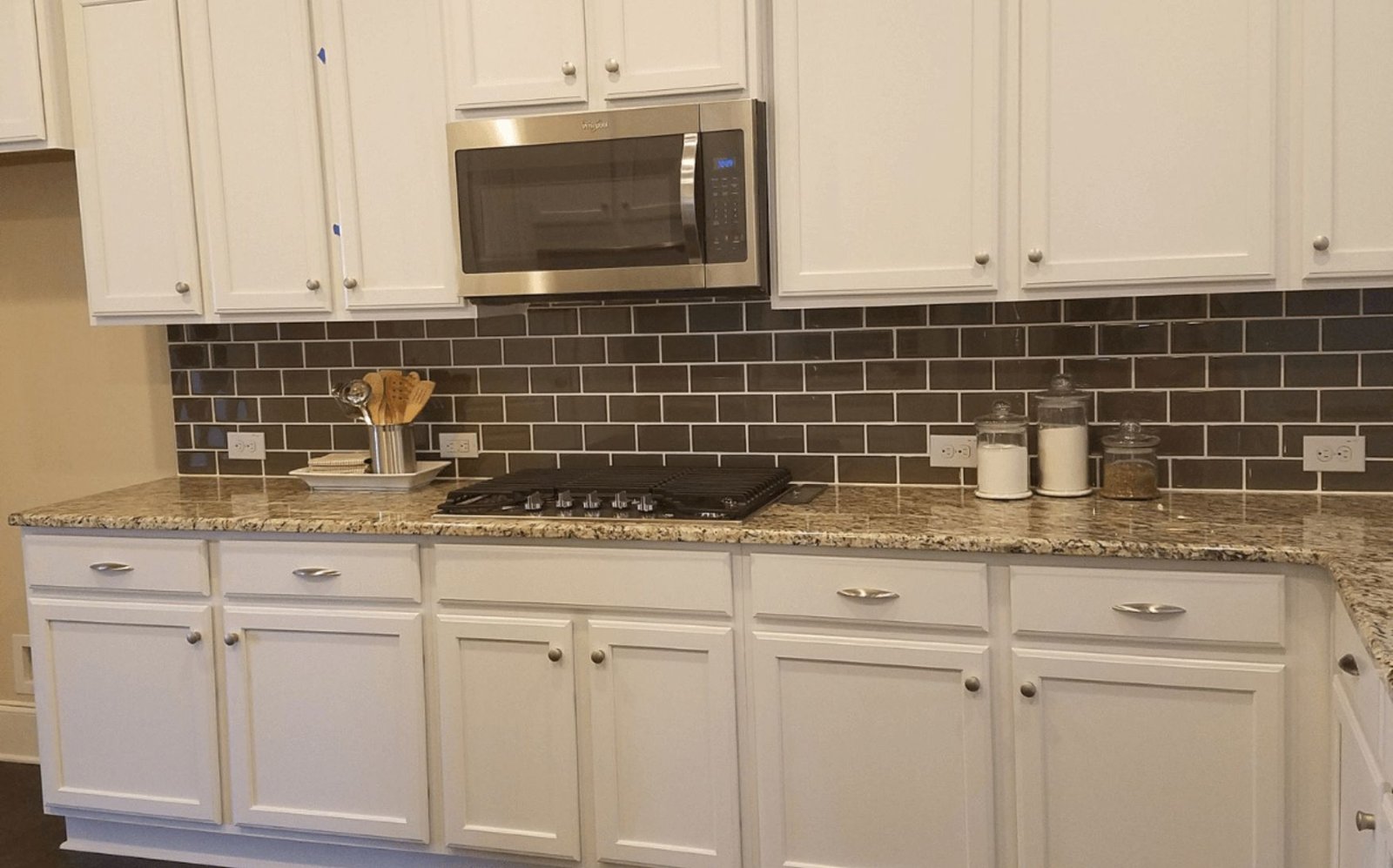
Both options are among the most common kitchen cabinet door styles, with each offering a different balance of appearance, functionality, and design flexibility.
Key Differences Explained: Partial Overlay vs Full Overlay Cabinets
After knowing about both designs, it becomes easy to understand the differences.
Appearance and Door Coverage
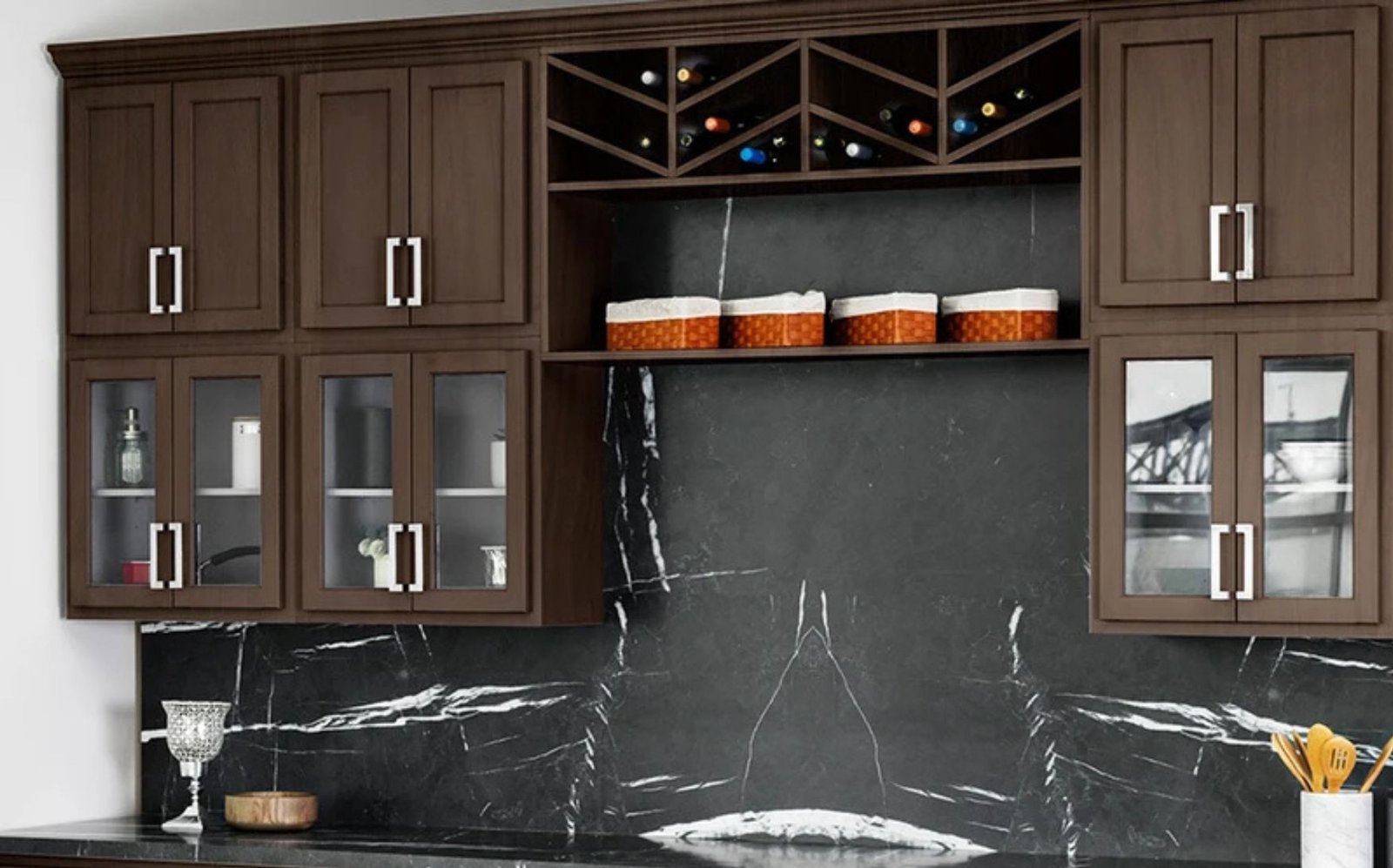
As there are no sections or gaps, full overlay cabinets possess a clean, seamless appearance. With only slight gaps between doors and drawers, the cabinetry looks like one continuous surface. This design works well in small kitchens because it makes the space feel open and visually less heavy. Full overlay cabinets are ideal for homeowners who prefer a sleek, simple aesthetic.
Partial overlay cabinets feature a more traditional look. Since there is significant depth between the door and the cabinet, they get a proper, refined look. These cabinets are considered for classic and farmhouse-inspired kitchens where detailing adjusts naturally. Partial overlay cabinets are best if you want a kitchen with more architectural detail and an old sense of charm.
Cabinet Frame Visibility
The frame, which is also known as the face frame, is the wooden border. It is attached to the front of the cabinet box.
With a full overlay cabinet design, this frame basically disappears visually. On looking closely, you may notice a thin sliver of the cabinet frame between the doors. The only things visually visible are door style, color, and finish.
In a partial overlay design, this frame is more visible than in full-overlay cabinet designs. They feel like a part of the kitchen design. You can paint it with a contrasting color or stain it to match the doors. For a two-tone look, they can be kept in a natural form.
Storage Accessibility
It is considered that the full overlay cabinetry doors are larger, so the openings are wider. This makes it easier to see inside your kitchen cabinets and grab what you need. You can easily access and exit the big pots, sheet pans, or small appliances from their storage area. This is where the extra 1 or 2 inches in opening width actually helps, even though the kitchen cabinet dimensions remain the same.
Partial-overlay doors are not as large as full-overlay doors, so the openings are a bit smaller. Now, the thing to understand is you do not lose storage space. It will be the same for both designs. But pulling out the big items takes a little more care and effort.
This difference is minor for most homeowners. But some of you, like me, may have mobility issues or just hate wrestling with cookware. This is what doesn’t happen with full overlay on everyday kitchen use.
Hardware Compatibility
This is something most people don’t think about. And on the installation day, it becomes a real challenge.
Partial overlay cabinets
Partial overlay cabinets work pretty well with any hinge style. You can use:
- Exposed decorative hinges (like oil-rubbed bronze or antique brass)
- Semi-concealed hinges
- Fully concealed European hinges
This flexibility allows you to use hardware as a design element. Traditional and farmhouse kitchens often feature visible hinges for more visual appeal and character.
Full overlay cabinets
Full overlay cabinets use concealed European hinges. These are adjustable hinges that completely hide inside the cabinet when the door closes. They are considered necessary because:
- They allow smooth adjustment to maintain the small, consistent gaps
- They support the weight of larger doors
- They help maintain the clean, sleek look that makes full overlay more attractive.
Installation and Door Adjustments
Door alignment matters, especially when you’re planning to install cabinets yourself.
Partial overlay
Partial overlay cabinets are easier to install and do not require precision like full overlay cabinets. The gaps between doors are about 1/2 to 3/4 inch. It helps hide minor alignment issues. Architectural and older home interiors mostly get such cabinet flexibility. It’s because their overall look does not get affected if cabinet openings are slightly disturbed.
The visible face frame makes imperfections less noticeable. This way, it becomes easier to achieve a neat appearance without being too concerned with perfection. This is the reason why installers do not charge as much for them as for full overlays.
Full overlay
Full overlay requires precision in installation to ensure a cleaner look. Even a small alignment issue with a door needs to be dealt with quickly for a consistent look throughout the kitchen. This adjustment of door positions takes you more time. Professional installers charge high for full-overlay drawer installations. It’s because they take a significant part of a day for installation and require more skill.
European hinges provide more functionality and adjustability options. They may cost more but allow you to easily handle the door alignment by offering more options. These are up and down, side to side, and in and out.
Design Flexibility and Future Upgrades
Some buyers are also concerned about long-term factors, such as design flexibility and aesthetic updates.
Full overlay cabinet style is made during construction. Their aim is to add a modern aesthetic in kitchens. So, you can’t easily change them without replacing the doors or the entire cabinet setup. This is required when design trends change, and homeowners get bored with the contemporary look.
Partial overlay cabinets give you more flexibility in design and adoption. You can:
- Paint the cabinet frames and doors in different colors for a stylish two-tone design.
- Replace the cabinet doors with a different style and keep the existing cabinet frames.
- Refresh the look by installing new cabinet hardware or replacing the hinges with a new style.
- Refinish the doors or the cabinet frames separately, rather than updating the entire cabinet in the same tone.
Partial overlay lets you make smaller, less expensive changes that still have value. Such things matter when you like to update the kitchen’s look after a few years without a full remodel.
Cost and Budget
One of the biggest differences between partial overlay and full overlay cabinets is cost.
Partial overlay cabinets are a budget-friendly choice. They cost around $100 to $350 per linear foot. Their prices are 15% to 25% lower than full-overlay cabinets in most cases. Your budget should be at least $2,000 to $6,000 for a common kitchen. This range varies depending on cabinet brand, material, and customization.
Full cabinet overlay needs approximately $200 to $500+ per linear foot. They are more expensive than partial overlay. This is because they feature larger cabinet doors, concealed European hinges, and need precise manufacturing and cabinet installation. These features improve their premium appearance but also increase the overall project cost. Therefore, the standard kitchen easily takes from $3,000 to up to $15,000 or more.
Partial Overlay vs Full Overlay Cabinets FAQs
Here are the answers to some common questions, so you do not leave with doubts:
Can you mix partial overlay and full overlay cabinets in the same kitchen?
Yes, you can combine partial overlay and full overlay cabinets in the same kitchen. Use frameless for upper cabinets and partial-overlay for lower ones. However, some of you may not like an inconsistent look. They can use one overlay style throughout the kitchen.
Do partial overlay and full overlay cabinets use the same cabinet boxes?
Yes, both styles of cabinets use the same cabinet boxes in most cases. The main difference is the size of the cabinet doors and the way they cover the face frame. Storage boxes are constructed the same way for both of them.
Which overlay style is easier to replace in the future?
Partial-overlay cabinets are considered easier to update. Replacing their doors doesn’t require a high level of precision. Full-overlay cabinet doors need to be carefully sized and aligned to maintain the slight, consistent gaps between them.
Can either overlay style be painted or refinished?
Yes, both overlay designs can be painted and refinished if the cabinet doors and frames are made of refinishable material. For example, solid wood or paint-grade MDF.
Which overlay style is better for DIY cabinet refacing?
Partial overlay cabinets are more DIY-friendly because the fewer gaps between doors make small measurements or alignment issues less prominent. Full-overlay cabinet refacing is done with precision to achieve a clean, uniform appearance.

Wrap Up: Partial Overlay vs Full Overlay Kitchen Cabinets
The difference between partial overlay and full overlay is in style, versatility, appearance, and budget. Full overlay gives you sleek, modern looking cabinets with easier access to storage. You have to pay more for it. Partial overlay delivers classic style in a budget-friendly range with more design flexibility.
Both are best, and neither is dominant over the other. So, you should pick the one that can work for your vision, budget, and kitchen aesthetic.
And there is something interesting you can consider. You can use both designs in the same kitchen. Some homeowners use full overlay on upper cabinets for a clean look and partial overlay on lowers to save money. Others do not prefer this combination due to cohesiveness. Understanding these differences makes it easier to choose the best kitchen cabinets for your space without compromising your preferred style or budget.
Think deeply about your type, and keep the important factors in mind before finalizing your decision. You will use those cabinets in daily kitchen life, so be thoughtful. Following the trend is not important, but choosing what works for you is. Tivoli Design Group offers cabinet styles that help homeowners compare partial and full overlay options for different kitchen designs.