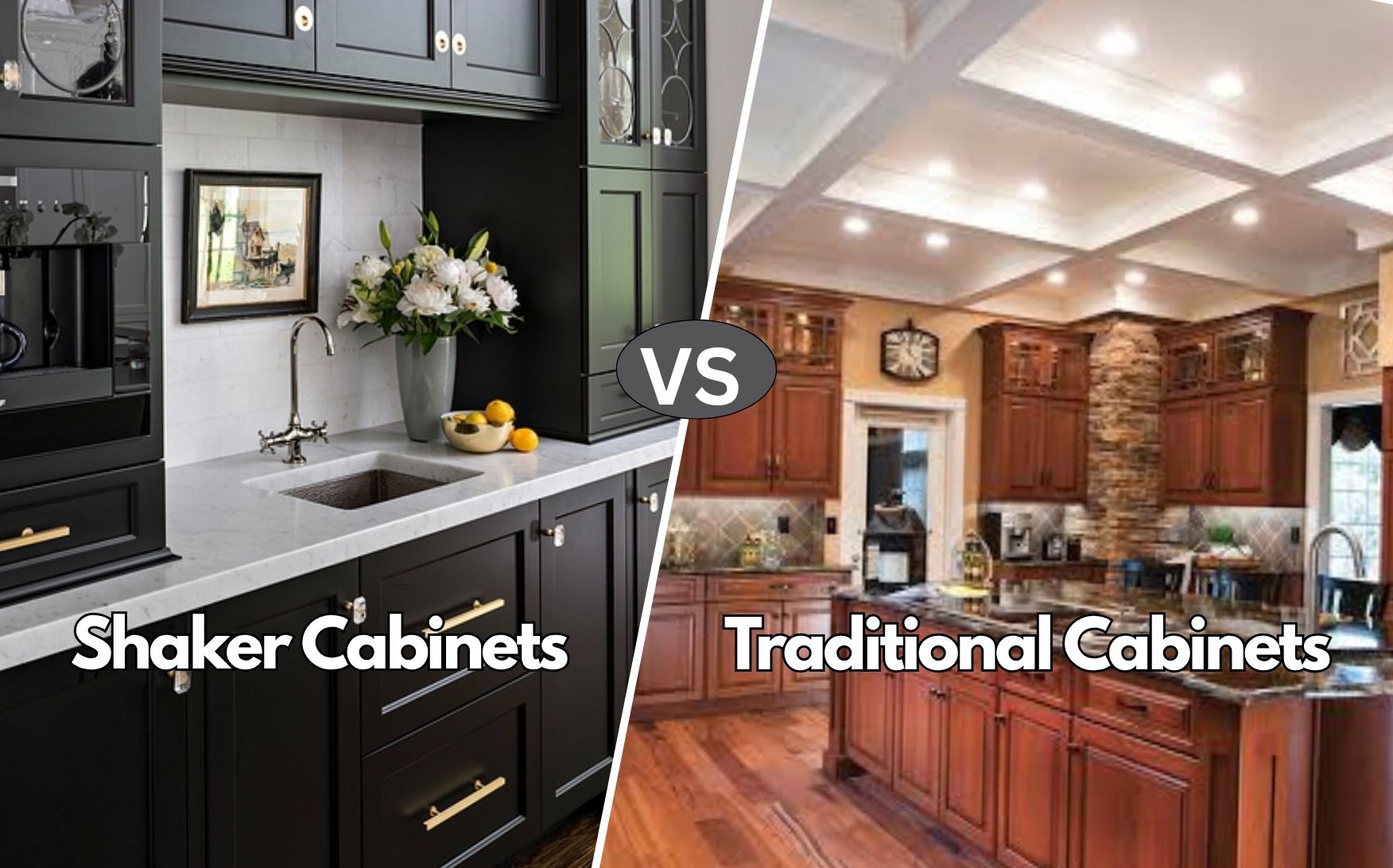
Kitchen cabinets are the expensive part of the kitchen, whether it’s the time of building or remodeling. It is considered a one-time investment. That’s why homeowners mostly want cabinetry that looks appealing and functions for decades. That’s where the shaker and traditional cabinet wars start. As both are classical, longevity, and practical options, many homeowners feel confused about choosing between them.
Knowing the comparison between shaker cabinets vs traditional makes it easier to decide which one aligns with your preferences. They differ in maintenance, style, versatility, and many other ways. So, if you are also choosing between them or just looking for reliable cabinetry, today’s guide will be helpful. We will show what differentiates the two most commonly used kitchen cabinets.
Quick Comparison: Shaker Cabinets vs Traditional Cabinets
Below is the side-by-side comparison to quickly understand which one suits your taste:
| Feature | Shaker Cabinets | Traditional Cabinets |
| Overall Style | Clean, simple, and classic look with minimal detailing. | Have raised panels that look elegant but are traditional. |
| Cabinet Door Design | Flat center panel surrounded by a simple five-piece frame. | Raised or recessed center panels with decorative edges, moldings, or carvings. |
| Visual Appeal | Sleek and understated, creating a neat and uncluttered look. | Detailed and heavy with a more formal appearance. |
| Best For | Modern, transitional, Scandinavian, farmhouse, and contemporary kitchens. | Traditional, Victorian, Colonial, French Country, Mediterranean, and luxury-style kitchens. |
| Material Options | Available in solid wood, MDF, plywood, and other engineered wood products. | Commonly made from solid wood, plywood, and premium hardwood species for decorative detailing. |
| Customization | Easy to customize with different finishes, hardware, and paints while maintaining a simple design. | Offers highly customizable opportunities through decorative moldings, corbels, glass inserts, carvings, and ornamental details. |
| Maintenance | Easy to clean because the plain surfaces and minimal grooves collect less dust and grease. | Requires more frequent cleaning as decorative profiles and sections can have dust and cooking residue. |
| Durability | Highly durable when built with quality materials and proper construction. | Equally durable when made from high-quality materials, though decorative details may require extra care to prevent damage. |
| Color Choices | Looks good in almost any color, from classic white and natural wood tones to bold painted finishes. | Often paired with wood stains, warm finishes, and traditional paint colors. Modern painted options are also available. |
| Hardware Compatibility | Complements both minimalist and decorative hardware. | Looks best with ornate knobs, pulls, and antique-inspired hardware that match its classic style. |
| Cost | Generally more affordable because of its straightforward design and simpler manufacturing process. | Usually costs more due to detailed fabrication, additional materials, and decorative features. |
| Resale Appeal | Good for increasing home value because its timeless design works naturally in a wide range of home styles. | Appeals most to buyers who prefer classic and traditional interiors. |
| Design Flexibility | Its flat, modern design can pair well with a range of components | Its traditional appearance makes it best suited to classic, statement interiors. |
What Are Shaker Cabinets?
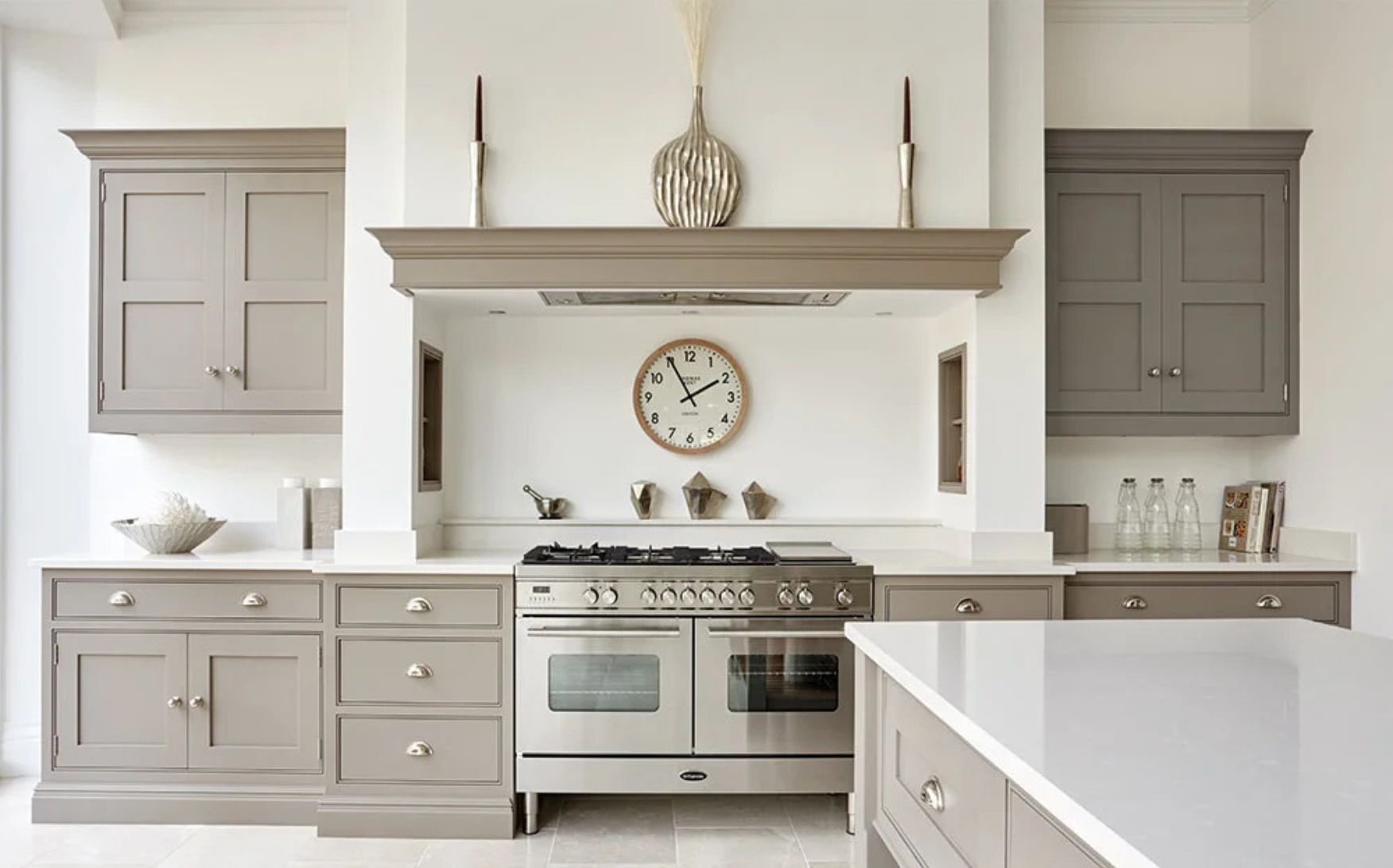
Shaker cabinets, no doubt, have been used for years for their clean lines and simple, attractive design. They are inspired by Shaker religious community furniture from the 18th century. They believe that functionality matters more than decorative cabinet design. It’s the reason Shaker cabinet style does not have extra detailing. Instead, they prioritize an old-time appearance that never goes out of style.
Five-piece door features increase their demand. We can see this design having a flat central panel surrounded by a frame, making an eye-catching, sleek appearance. No unnecessary embellishments are used. Shaker cabinets are just a cabinet style for which materials like solid wood, plywood, and MDF can be used. This design suits a variety of kitchen styles, including modern, transitional, farmhouse, Scandinavian, and even traditional.
What Are Traditional Cabinets?
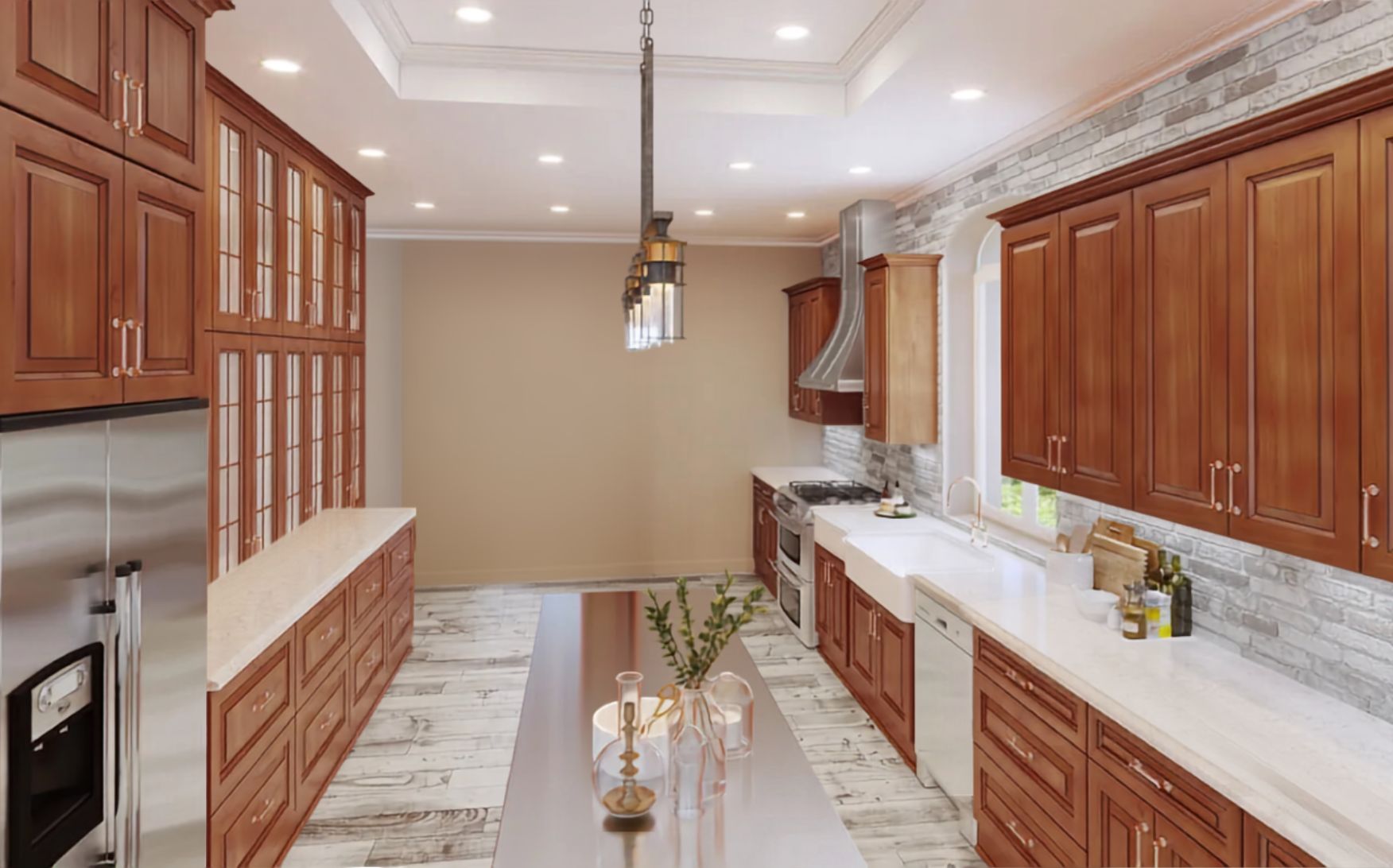
No doubt Shaker cabinets are old, but their look makes them perfect for all ages. On the other hand, traditional cabinets feature details and decorative elements in the texture. This is what makes them different from Shaker cabinetry. Elegant craftsmanship gives them a classical appearance. As they are not as simple as Shaker, they mostly have raised panels. Moreover, they feature recessed panel doors, decorative moldings, beveled edges, and other ornamental elements. This is why they work well in traditional, older, European-style kitchens.
Traditional cabinets can be made of solid wood, plywood, and engineered wood products. Choose materials that suit your preferences, compare reputable kitchen cabinet brands, and finish them with either natural wood stains or painted colors. Beyond just kitchens, they are also considered for Colonial, Victorian, French Country, Mediterranean, and other classic home styles. Mostly, homeowners choose them when detailed design is needed to complement the overall architecture.
Understanding Key Differences: Shaker Style Cabinets vs Traditional
We learn most of what we know about modern and traditional shaker cabinets. Now, you can better understand their differences. So, let’s get started!
Materials and Construction
Since both are cabinet styles, different materials can be used for them, whichever you prefer. This similarity does not come in how they are built due to different designs.
The shaker cabinet’s simple design does not require unnecessary components or extra patterns. Hence, their manufacturing is far easier than that of traditional cabinets. Even traditional shaker cabinets do not need more craftsmanship. If you are someone who likes patterns, grooves, and ornamental features, this style may not work for you.
As traditional cabinets are complex to construct, they obviously need significant time and more money. The machining, assembly, and finishing of them are not like shaker drawers. This means they differ from birth. Building recessed panels, moldings, arches, and carved accents on multiple cabinets is not straightforward.
Design and Appearance
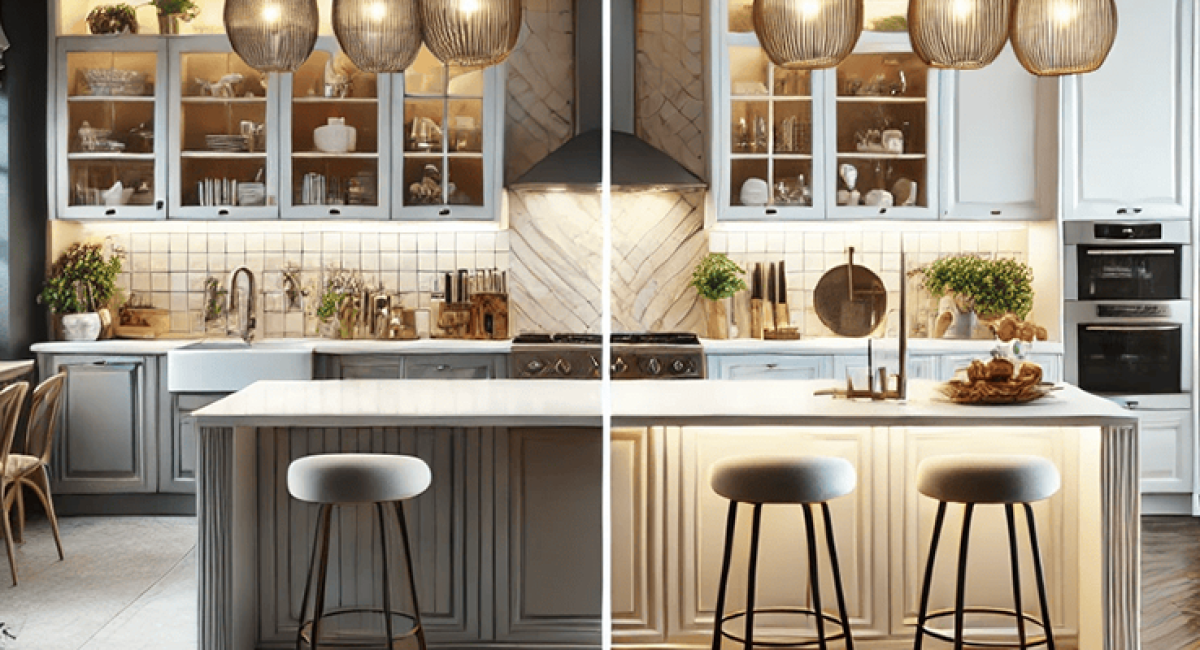
Both cabinets are totally different in design and visual appeal. As I shared before, the shaker drawers showcase a flat center panel with a simple five-piece frame. This allows them to work well in modern, minimal, and aesthetic kitchens, e.g. transitional, statement, contemporary, and Scandinavian. Their simple, clean, neat lining appearance lacks detailing, making them the ultimate choice for a variety of interiors.
Traditional cabinets are usually recognized by their panel design, decor, and multiple types of detailing, even on edges. Such drawers are not outdated, but many of us still like making antique visuals. That’s where traditional cabinets are used with different ancient sets to complete the look they want. This shows that it is not important that this type of cupboard is only used in a farmhouse. They can also contribute to accomplishing a luxurious appearance.
Now, I also have to clarify the visual impact a space gets through them. Shaker creates a sleek, bright, open, and minimal look if paired with white countertops and sufficient lighting. This mainly depends on how you pair and style them. On the other side, traditional cabinets are either used as a complementary component or make a focal point. The ornate detailing and artisan craftsmanship help achieve an artistic, exceptional aesthetic, whether in the kitchen or some other area.
Customization Options
Personally, I feel that customization means changing the true identity of style. Well, both are customizable, but let’s see how far. Knowing it is important, so no extra customization to pursue that can harm the original design.
For shaker cabinets, homeowners can choose different door sizes, materials, finishes, colors, hardware, and stains to match specific needs. To get a slightly more refined look, features like glass-front doors, open shelving, pull-out organizers, and soft-close hardware are best. Always customize them in a way that their signature look does not change. This level of customization offers flexibility to consider them for a wide range of kitchen styles.
Traditional cabinets offer more options for detailing and decoration, so you can build the appeal you like. Almost everything can be personalized, from door profiles and rails to trim and panels. They are available in various range of stains, painted finishes, and premium hardware to meet different classic design preferences.
Durability and Lifespan
However, the durability depends on the material used during construction. The common materials used for Shaker cabinets are highly durable and can withstand everyday activities. It is considered that fewer decorative details are the reason why their design can last longer. The beauty of cabinets can be lost even with a small crack or chip. This mostly happens with cabinets that have grooves and components. This is why they are considered functional, not just modern. According to our study, they can last for 20 to 50 years based on how strong the material holds up.
Even if traditional cabinet materials are stronger and more durable, a small decoration mishap can make them lose their charm. Therefore, they need to be maintained and operated carefully. The corners and grooves can have dust, grease, and other particles, making them difficult to clean. The finish on them can show daily wear, and repairs require more cost and expertise to restore the design. These cabinets can work for 20 to 50+ years based on how much effort you put into them. They have this lifespan due to a heavy structure that helps them effectively withstand daily kitchen use.
Maintenance and Cleaning
Understanding this difference is so easy. The shaker cabinetry lacks additional elements and has flat surfaces and panels. This is why it is much easier to clean and maintain compared to traditional cabinetry. You can remove dust, particles, and marks (e.g., fingerprints) without worrying about the cleaning of hard-to-reach sections. Within a few wipes, the cabinet surface can be cleaned. If you’re looking for detailed instructions on how to clean kitchen cabinets, use a gentle soap and a soft cloth to remove dust, grease, and fingerprints without damaging the finish.. And the interesting thing is, you do not even need to do cleaning regularly. It can be done once a week or after 3 to 4 days.
The carved details, raised panels, and decorative moldings look gorgeous, but they collect dust and kitchen grease. They remain in sections that are not very easy to wipe. You may have to use a soft brush or old toothbrush to reach into the grooves. During this, be careful with ornate finishes. They can be sensitive. The simple surface can be maintained using the same products as shaker cabinets. Their look needs to be refreshed multiple times a week to remove germs and hidden particles.
Note: Avoid using acidic or harsh chemicals on cabinets, as they may gradually or quickly harm their appearance.
Cost Comparison
The price of cabinets depends on multiple factors such as region, resources, labor fee, and design type, whether custom or pre-built. Therefore, your total can vary. Below is a cost comparison of both cabinet styles on average scale:
| Aspect | Shaker Cabinets | Traditional Cabinets |
| Average (per linear ft) | $100 to $$1,200+ | $150 to $1,200+ |
| Semi-custom price (per linear ft) | $150 to $650 | $250 to $700 |
| Custom price (per linear ft) | $400 to $1,500 | $500 to $1,200+ |
| Labor and installation cost per linear ft | $50 to $450 per linear foot or $50 to $110 per hour | $50 to $200. This varies from region to region |
| Material usage | Less material waste due to minimal detailing | More material required for raised panels and trims |
| 10×10 size kitchen cost | $1,500 to $30,000+ | $5,000 to $18,000+ |
| Long-term value | Better resale value due to timeless, versatile look | Can add charm but may appeal to a limited buyer |
| Repair and touch-up cost | Cheaper and easier as design is simple | Pricier, as matching carved detail takes professional skill |
Shaker vs Traditional Cabinets FAQs
The main differences have been discussed. Some common questions from our customers are still not answered. We hope the FAQs below cover most of them:
Which cabinet style adds more resale value to a home?
Shaker drawers increase the home’s resale value. Using transitional cabinets can make the kitchen feel older and outdated. Only a few homeowners understand the value of classic architecture. The safest way is to use minimal, elegant style components if resale matters.
Can I mix Shaker and Traditional cabinets in the same kitchen?
Yes, combining both cabinetry styles is not a bad idea. That’s where you can consider traditional shaker cabinets. Use them for the island and raised-panel cabinets on the side perimeter, or vice versa. Try uniform finishes, colors, and hardware in such a pairing for a consistent effect.
Which cabinet style is easier to match with future kitchen updates?
Shaker cabinets have been used in our kitchen for decades and are still called modern cabinets. They are likely to remain a trendy, in-demand product in the market. This popularity is due to their ability to naturally coordinate with a range of countertops, backsplashes, lighting, and hardware.
Which cabinet style is better for small kitchen design?
Slim shaker cabinets are best for small kitchens to give them a visually lighter and less heavy look. They avoid the cluttered effect that traditional cabinets offer. This way, the space feels more open, less compact and crowded.
Can both cabinet styles be refinished instead of replaced?
Yes, both of them can be refinished to restore their original charm. Replacing the entire cabinetry is expensive, while repainting is easy, cost-effective, and a simple way to refresh the kitchen’s look.

Shaker Cabinets vs Traditional Cabinets: Which Should You Choose?
You should choose cabinets considering important factors such as your preferences, kitchen style, budget, kitchen cabinet dimensions, and pairing with other items. What you want to bring to your kitchen matters a lot. Pairing cabinets thoughtfully with other components helps achieve the look you want to create. Timeless and classic shaker design can hardly go out of style. They are modern, simple, and versatile for use in several kitchens. Turn to traditional ones if a minimal look is not your taste.
For this, you have to plan the overall look very smartly. The other major factor is maintenance, so pick one that is easier for you to upkeep. Before finalizing your decision, take time to think about these factors. Plus, you should check the cabinets yourself instead of relying on online images. The pro tip we give our customers is to place the sample in their space. This showcases whether the cabinets look as you expect.