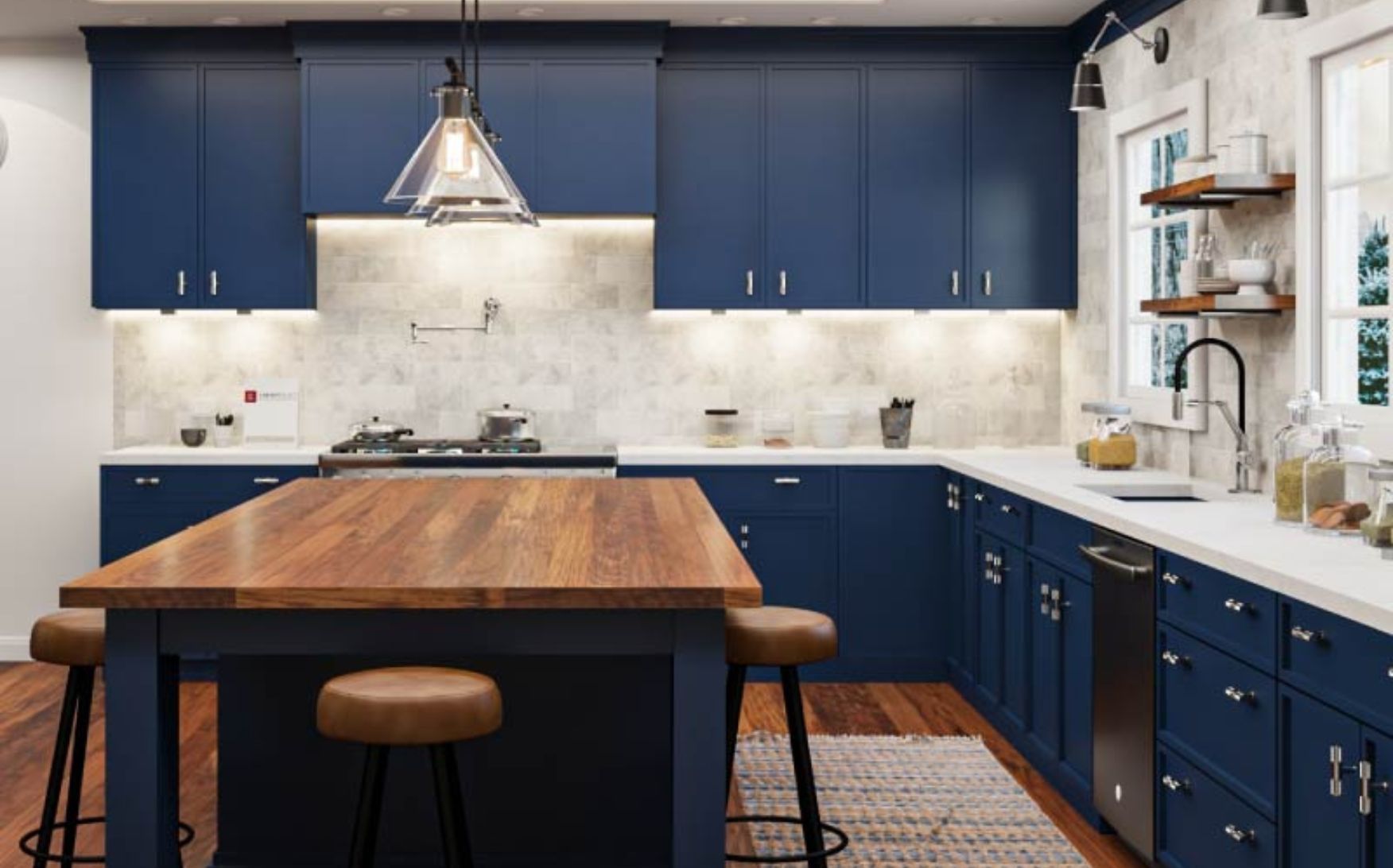
When it comes to cabinets, especially in the kitchen, most homeowners opt for color options, such as the shades of brown or white. But those who prefer a stylish and trendy look often choose the shades of blue. However, many homeowners still wonder whether the blue kitchen cabinets are worth it. This is a common concern, as blue kitchen cabinets are a relatively new design choice compared to brown, beige, or white cabinets. Blue with deep navy tones, muted slate blues, and dusty coastal shades creates a calm look and feel. Also, they can be a great alternative to traditional white or gray cabinetry.
These days, designers use blue cabinetry in a modern kitchen with a quartz or marble surface. They use brass fixtures and natural stone flooring to create a balanced palette. But should you go for Naval cabinets? Continue reading the following to make an informed decision.
The Pros And Cons of Blue Kitchen Cabinets
As the blue kitchen cabinets are gaining popularity these days, it is important to understand the pros and cons. These will help you make an informed decision. Here is the table pointing out the key benefits and drawbacks of naval cabinets.
| Pros of Blue Kitchen Cabinets | Cons of Blue Kitchen Cabinets |
| Strong visual character: Blue kitchen cabinets add depth and personality without feeling overly bold like red or bright colors. | Lighting sensitive: Dark blue kitchen cabinets may make small or poorly lit kitchens feel heavier or smaller. |
| Timeless color family: Deep tones such as Naval often act like near-neutral colors and remain stable across design trends. | Requires careful color coordination: Blue kitchen cabinets must match countertops, backsplash, flooring, and hardware carefully. |
| Pairs well with natural materials: Blue kitchen cabinets complement marble, quartz, quartzite, and natural wood surfaces effectively. | Not universally neutral for resale: Some buyers prefer white or gray kitchens, which can affect broad resale appeal. |
| Hides minor wear better than white cabinets: Medium and dark blues conceal fingerprints, small scuffs, and light stains more easily. | Dust and grease may show on darker finishes: Kitchen traffic can reveal residue if cabinets are not cleaned regularly. |
| Creates depth in open kitchens: Blue cabinetry helps define the kitchen area in open-concept layouts. | Trend risk with certain shades: Bright or highly saturated blues may fall out of style faster than muted tones. |
| Works well for two-tone kitchen designs: Blue base cabinets with white uppers maintain brightness while adding contrast. | Paint touch-ups can be noticeable: Matching painted cabinet finishes later can be challenging. |
| Enhances focal points: Blue islands or accent cabinets create a strong visual anchor in modern kitchens. | May require stronger lighting design: Under-cabinet and ceiling lighting often need adjustment to balance darker cabinetry. |
| Versatile shade range: Options like Xterra Blue or deep navy provide both modern and classic design flexibility. | Design mistakes become noticeable: Poor pairing with countertops or flooring can make the color look mismatched. |
Blue cabinets undoubtedly have a strong character and pair well with natural stone and modern materials. However, it is important to evaluate lighting, color coordination, and long-term resale before buying such dark colored cabinetry.
Pros of Blue Cabinets
Homeowners can enjoy a wide range of benefits of blue cabinets, which include:
Strong Visual Character Without Overpowering the Room
Blue color cabinets are not just about aesthetics but also about maintaining balance as well. Unlike colors like red or bright green, blue offers a clean and calm appearance that feels grounded. Many homeowners prefer a kitchen space that looks modern but also feels comfortable, and blue cabinets achieve that goal.
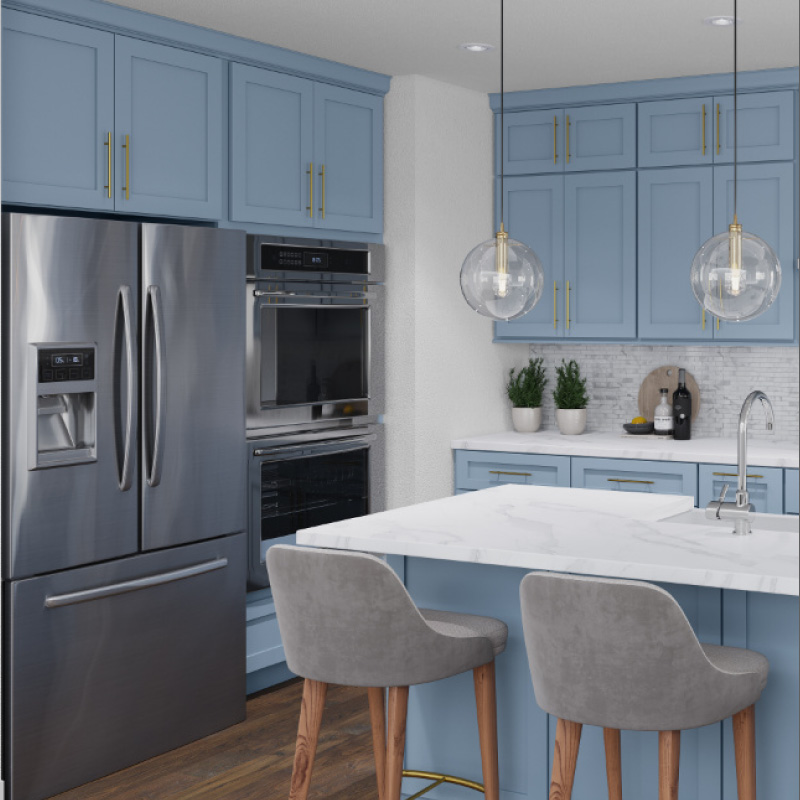
Dark blue tones, such as Naval, offer a rich base for the room. Lighter tones like Xterra Blue offer beauty while keeping the space airy. Because blue is well-suited between neutral and bold, it easily blends well with several materials:
- White or cream quartz countertops
- Marble surfaces with gray veining
- Natural stone backsplashes
- Warm wood floors
This flexibility helps homeowners design kitchens that feel thoughtful rather than trendy.
Timeless Appeal Compared to Many Color Trends
One of the major problems with kitchen designs or renovation is the changing trend. Trends are forever changing, like some color types used to dominate the kitchen designs, such as avocado green or bright orange. They once dominated kitchens, but later disappeared. However, Blue has shown stronger staying power. Design professionals usually find navy or slate blue to be almost neutral.
These tones act just like gray or charcoal in a design palette. They anchor the room while helping other elements to stand out. For example:
- Naval cabinets pair well with brass hardware and marble countertops.
- Light blue works well with light oak flooring and matte black fixtures.
These combinations rely mostly on classic materials, which means the overall design tends to age well.
Works Well With Natural Stone Surfaces
Blue cabinets work well with stone surfaces. This combination is widely popular in many modern kitchen designs. Natural materials such as marble, quartzite, and limestone add texture while blue cabinetry adds contrast that highlights the stone pattern. Common pairings include:
| Cabinet Color | Stone Pairing | Result |
| Navy Blue | White marble | Classic contrast |
| Dusty Blue | Quartz with soft veining | Soft contemporary look |
| Deep Blue | Soapstone | Bold, dramatic kitchen |
Tivoli Design Group often recommended these combinations because they create visual balance while maintaining durability.
Hides Minor Wear Better Than White Cabinets
White cabinets highlight every smudge, fingerprint, stain, or scuff. Blue cabinets can easily hide such minor marks, which makes them the best choice for busy family kitchens. These kitchens have to face daily traffic, cooking activity, and constant cleaning.
Medium and dark blues reduce visible wear in several areas, such as:
- Around cabinet handles
- Near trash pull-outs
- On lower cabinets close to the floor
While no cabinet finish stays perfect forever, darker colors offer a low-maintenance surface.
Adds Depth to Open-Concept Kitchens
Modern homes usually have open floor plans. Kitchens are not a separate room, but they are linked with the living areas and dining rooms. Colors play an important role in these layouts to define the kitchen zone.
Blue kitchen cabinets create a visual anchor. The color emphasizes where the kitchen begins without adding any boundary walls or partitions. These blue base cabinets, combined with white upper cabinets, create depth but also keep the room looking bright.
Cons of Blue Cabinets
While blue cabinets offer huge benefits to homeowners, they do have some drawbacks as well. Homeowners should consider before deciding.
Lighting Conditions Matter
While blue cabinets may look calm, they behave differently under different lighting scenarios. If your kitchen has limited natural light, then dark blue cabinets can make the room feel heavier and smaller. Artificial lighting can also change how the color appears. For example, the blue may look gray under cool LED lights, while warm lighting may change the navy to teal.
Homeowners should test paint samples in their kitchen before committing to a final color.
Color Matching Requires Careful Planning
Neutral cabinets offer better flexibility. Blue cabinets, however, require careful coordination with other materials. Homeowners should consider how the color will interact with elements like:
- Countertops
- Flooring
- Wall paint
- Backsplash tile
- Hardware finishes
A mismatch can make the kitchen look disjointed; for instance, a warm wood floor may look odd with certain cool blue tones. Professional designers often recommend opting for a palette around the cabinet color to avoid this problem.
Bold Colors Can Affect Resale Appeal
Blue cabinets are still not as common as the other neutral cabinets. White, beige, and gray cabinets are widely popular among a wide range of audiences. Blue cabinets will still attract buyers, but the shade matters. Deep navy usually performs better than bright blue. If resale value ranks as a top concern, homeowners may consider:
- Blue base cabinets with white uppers
- Blue kitchen islands instead of full cabinetry
- Muted navy instead of vibrant blue
This design strategy keeps the design unique while reducing risk.
Maintenance Still Matters
Blue cabinets can hide fingerprints better than white cabinets, but they still require maintenance. Darker painted cabinets can easily show dust buildup, grease residue near cooking areas, and water spots near sinks. Regular cleaning with gentle cabinet cleaners helps maintain the finish.
Opting for the high-quality cabinet paint also improved durability. Professionally finished cabinets can resist wear better than DIY painted cabinets.
Trend Risk Exists With Certain Shades
Blue kitchen cabinets are gaining huge popularity in modern kitchen design. However, some blue tones tend to fade faster than others. Muted navy tones have remained stable for years. Bright cobalt or electric blue may not age as well.
Homeowners usually choose shades like navy because they feel restrained rather than loud. Selecting a balanced shade helps the design stay relevant over time.

When Should You Choose Blue Kitchen Cabinets?
Blue cabinets work especially well in certain kitchen layouts and design styles.
| Condition | Why It Works | Examples / Design Tips |
| Kitchens with Good Natural Light | Natural daylight prevents dark blues from feeling heavy or oppressive. | Large windows, skylights, or open layouts that allow sunlight to reach cabinets. |
| Homes with Natural Materials | Blue pairs well with stone and wood, softening its boldness. | Marble countertops, quartzite surfaces, wood flooring, limestone tiles. |
| Kitchens with a Strong Focal Point | Blue cabinets stand out and anchor the space when highlighted by complementary design elements. | Statement island, marble backsplash, brass or brushed gold hardware. |
Blue kitchen Cabinets Pros And Cons FAQs
Let’s answer your questions about blue cabinets.
Are blue kitchen cabinets going out of style?
No. Blue cabinets are still popular in kitchen design because they balance personality with lasting appeal. Navy tones and muted blues continue to appear in modern kitchen renovations.
What countertops look best with blue cabinets?
Several countertop materials pair well with blue cabinets, including white quartz, marble with gray veining, light granite, soapstone, and quartzite. They brighten the kitchen while highlighting the cabinet color.
Are navy blue kitchen cabinets good for resale value?
Yes. But careful and thoughtful planning is crucial, as wrong color and element pairing may make the kitchen space cramped.
Do blue kitchen cabinets make a kitchen look smaller?
Yes. Dark blue cabinets may make the kitchen feel smaller if the room lacks natural light.
Are blue kitchen cabinets harder to maintain than white cabinets?
Yes. Regular maintenance includes cleaning the dirt and wiping the surface gently.

Bottom Line
Blue kitchen cabinets are an interesting cabinet choice in any kitchen. The color looks and feels calm while making any kitchen look modern. The blue cabinets add character while still working with classic materials such as marble, quartz, and natural wood. When paired with strong lighting and balanced finishes, blue cabinetry can change a kitchen into a refined, welcoming space.
Homeowners should consider practical aspects before selecting this color. The final outcome is influenced by lighting conditions, material combinations, and resale considerations. The cabinets will enhance your kitchen if you choose a palette that is well thought out.